

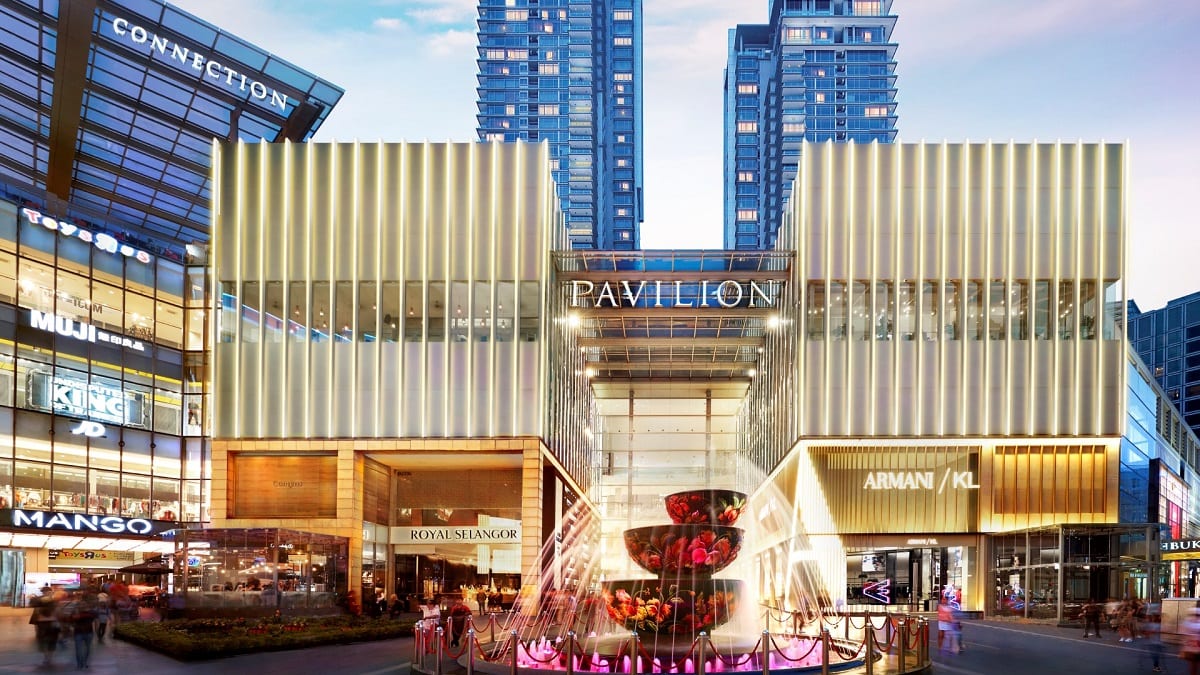
Listed in 2011, Pavilion REIT owns five retail malls and an office tower, with its portfolio of properties valued at RM8.5 billion in 2024. Its portfolio includes the renowned Pavilion Kuala Lumpur Mall and Elite Pavilion Mall that are popular among tourists and locals as well as the recently acquired Pavilion Bukit Jalil. The management also sought unitholder approval for the acquisition of Banyan Tree Kuala Lumpur and Pavilion Hotel Kuala Lumpur from its sponsors, further expanding its portfolio to include hospitality assets.
Here are eight things I learnt from the 2025 Pavilion REIT AGM and EGM.
1. Gross revenue increased 16.9% year-on-year to RM845.9 million in 2024 because of full-year contributions from Pavilion Bukit Jalil and higher rental income from Pavilion Kuala Lumpur Mall amid higher customer footfall. Similarly, net property income increased 13.9% year-on-year to RM522.8 million in 2024 and partially offset by higher operating expenses like higher labour costs, maintenance and service expenses as well as electricity surcharges passed through by Tenaga Nasional Berhad (TNB, electric utility). Distribution per unit increased 3.7% year-on-year to 9.34 sen in 2024 despite the increase in the number of shares, though this was tempered by higher borrowing costs resulting from additional loans taken to acquire Pavilion Bukit Jalil.
2. In 2024, Pavilion Kuala Lumpur Mall, Elite Pavilion Mall, and Pavilion Bukit Jalil were significant contributors, accounting for 98.6% of the REIT’s net property income. These three key malls recorded higher occupancy rates year-on-year in 2024, ranging between 89.7% and 97.8%.
3. The REIT’s debt expiry is mostly spread between 2026 and 2028. The CEO expressed optimism in renewing the 2% of debt expiring in 2025 at a potentially lower average cost of debt, around 4.5%, compared to the overall average cost of debt of 4.8% in 2024. About 12.5% of its loans are on fixed rates.
4. The management expects a moderate increase in rental reversion in 2025 as 47.9% of the REIT’s total space is up for renewal during the year. Higher advertising income will also contribute to DPU growth in 2025 following the completion of the upgrade of the LED screen outside Elite Pavilion Mall. The CEO believes there is more room for growth in rental income from Pavilion Bukit Jalil as its occupancy rate increases to above 90% in 2025 from 89.7% in 2024.
5. To address the underperformance of DA MEN Mall, the REIT signed a three-year master lease with Easyhome International (M) Sdn Bhd in 2024, aiming to reposition the mall as a home improvement centre by September 2025. This new arrangement guarantees rental income and offers potential for shared net property income. The mall made up of 1.9% of the REIT’s assets under management in 2024.
Based on my observations, similar concepts like Viva Home in the capital have struggled to gain traction, which might indicate a potential uphill battle for this repositioning, alongside the general risk of tenant default.
6. The management remains confident in Pavilion Kuala Lumpur Mall’s competitive positioning amidst new market entrants, including the nearby The Exchange TRX mall. The CEO highlighted only one tenant from its flagship mall has relocated to the competing mall. Pavilion Kuala Lumpur Mall is still the go-to place for most (premium) international and regional brands to open their flagship stores. The CEO also believes increased mall development in the area will ultimately benefit tourism and overall footfall.
7. The remaining payment for the Pavilion Bukit Jalil acquisition will be funded through either equity or debt financing, depending on which offers the most favourable terms. Separately, RM10 million was initially withheld from the purchase price as defects rectification payment, with the remaining RM6 million only to be released once all defects are rectified at the vendor’s cost.
In 2024, the mall’s net property income (NPI) of RM110.1 million fell below its acquisition target of RM146 million, primarily due to higher electricity surcharges passed through by TNB. The CEO noted that if the annualised NPI target is not met by June 2025, the final payment to the vendor will be adjusted according to the valuation of the mall.
8. Pavilion REIT is in the process of acquiring Banyan Tree Kuala Lumpur and Pavilion Hotel Kuala Lumpur for RM480.0 million from its sponsors, with completion expected in the second half of 2025. The acquisition, to be financed via a combination of equity and debt, will diversify the REIT’s portfolio into hospitality assets. It offers an initial gross yield of 7.0% and net yield of 6.5% respectively, which is accretive to the REIT’s overall property yield of 6.2% in 2024. Strategically located in Bukit Bintang and connected to Pavilion Kuala Lumpur Mall, these hotels target high-paying guests, providing complementary and synergistic offerings to the REIT’s existing retail and office assets.
| 2024 | Banyan Tree Kuala Lumpur | Pavilion Hotel Kuala Lumpur |
| Average occupancy rate | 82.1% | 81.5% |
| Average room rates (Q3 2024) | RM1,383 | RM573 |
| Land tenure | Freehold | Leasehold (expiring in 2109) |
The hotels will be leased back to Harmoni Perkasa Sdn Bhd for at least 10 years on a double net lease basis with fixed rental payments and variable rental profit component. Fixed rentals can increase between 5% and 10% every five years. The sponsors’ significant stake (at least 80% in the five years, then 75% for another five years) in the lessee underscores their continued exposure to the hotels’ operational performance. Both hotels have been and will continue to be managed by Banyan Tree Hotels & Resorts Pte Ltd.
The proposed placement (including to EPF) is the primary method for raising cash, aiming to increase public float from 41.5% to 47.1% as management prefers more liquidity. However, this option may reduce DPU from 9.34 sen to 9.25 sen.
On the other hand, the proposed issuance of consideration units to vendors serves as an alternative to ensure settlement certainty and could lead to a DPU-accretive outcome of 9.39 sen. The management is inclined towards a mix of consideration units, debt, and private placement to balance DPU accretion with gearing, which is targeted to be lower post-acquisition. The hotels will represent 5.5% of the REIT’s assets under management (AUM) post-acquisition, slightly reducing Pavilion KL’s AUM contribution. An advance lease rental component amounted to RM33.5 million was included within the acquisition price, guaranteeing first-year rent.
The fifth perspective
Pavilion REIT is well-positioned to benefit from Malaysia’s tourism recovery, boosted by the Visit Malaysia 2026 campaign, influx of tourists from neighbouring countries as well as visa-free periods for India and China. Despite new retail competition, Pavilion Kuala Lumpur Mall is well positioned due to its premium appeal and its ability to attract flagship brands. The upcoming acquisition of the two hotels will further diversify its portfolio.
Liked our analysis of this AGM? Click here to view a complete list of AGMs we’ve attended »