
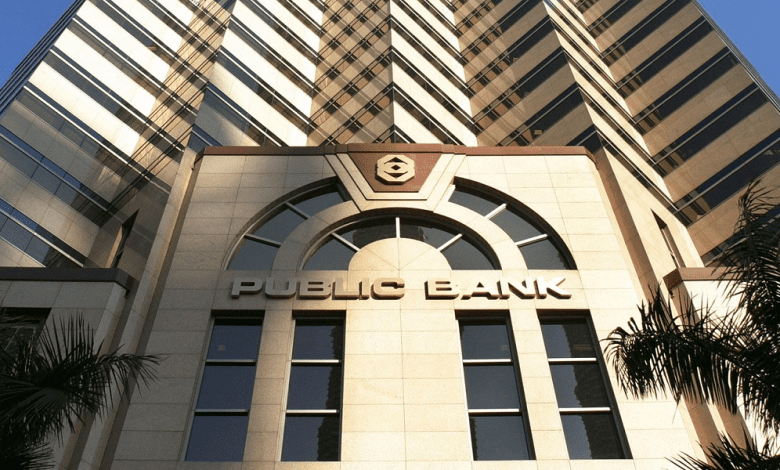
Listed in 1967, Public Bank is the second-largest company on Bursa Malaysia. The bank’s AGM is often met with shareholder praise for how well the company is managed. Its performance over the past year has further solidified its reputation for prudent management and consistent delivery of value.
Here are 12 things I learned from the 2025 Public Bank AGM.
1. Operating revenue increased 7.0% year-on-year to RM27.2 billion in 2024, driven by the 15.2% growth in non-interest income. Net profit grew 7.5% year-on-year RM7.1 billion in 2024 while dividend per share increased from 19 sen in 2023 to 21 sen in 2024. Dividend payout ratio has been consistent and has increased over the years from 51.4% in 2019 to 57.0% in 2024. CEO Tan Sri Dato’ Sri Dr. Tay Ah Lek expects a higher dividend payout at 60% in 2025.
The bank maintained its leadership position in the financing of residential properties, commercial properties, and hire purchases with market shares of 20.2%, 32.0%, and 31.8% in Malaysia respectively. It is also the market leader in domestic SME financing with a notable market share of 17.9%.
2. Public Bank is often touted as the most cost-efficient bank. It continued to outperform its banking peers by recording the lowest cost-to-income ratio of 34.5% compared to the industry average at 47.3% in 2024.
It maintained its good asset quality with a gross impaired loans ratio of 0.5% compared to the industry average of 1.4% in 2024. Separately, loan loss coverage ratio stood at 166.2% (237.7% if inclusive of regulatory reserves) and was a lot higher than the 91.4% industry average. These figures speak volume of the bank’s credit risk management and stringent onboarding acceptance criteria.
3. Public Bank recorded healthy expansion in its loans and deposits. Its gross loans increased by 6.3% year-on-year to RM424.2 billion in 2024; notably, its domestic loans grew by 6.7%, surpassing the peer average of 5.5%.
Customer deposits increased by 4.9% year-on-year to RM433.3 billion. Domestic deposits were the primary driver of this growth, with Public Bank’s growth rate (4.8%) outperforming the industry average (3.0%). In particular, domestic core customer deposits grew 9.8%, primarily driven by a 13.1% increase in fixed deposits.
Net interest margin increased from 2.20% in 2023 to 2.21% in 2024. It is expected to experience a single-digit compression in 2025 in line with the banking industry amid falling interest rates and increased competition for low-cost deposits notably from digital banks.
4. In terms of profitability, its net return on equity of 13.2% in 2024 was also among the highest in the banking industry (10.3% on average).
| One year | Three years | Five years | |
| Total shareholders’ return | 11% | 23% | 38% |
Public Bank is in a stable and healthy capital and liquidity position. Tay expects some forms of capital savings once the Basel reform is effective in July 2026.
| Public Bank (2024) | Minimum requirement | |
| CET capital ratio | 14.3% | 7.5% |
| Total capital ratio | 17.1% | 11.0% |
| Liquidity coverage ratio | 133.4% | 100% |
5. Public Bank’s wholly-owned subsidiary, Public Mutual, consistently maintains a leading market share of about 34.7% in the domestic retail private unit trust industry. This subsidiary contributed RM860 million in profit before tax to the group in 2024. Its total assets under management stood at RM102.0 billion in 2024. Public Mutual manages 185 funds across various asset classes and geographical markets.
The subsidiary acknowledges increasing competition from the rise of low-cost exchange-traded funds but differentiates itself by providing personalised services. According to Tay, most of Public Mutual’s funds continue to outperform their respective benchmarks. It is worth noting that sales charges can sometimes be substantial, potentially impacting investors’ overall gains.
6. In 2024, Public Bank acquired a 44.2% stake in LPI Capital. The acquisition presents synergistic cross-selling opportunities across property, hire purchase, and SME financing, as well as home, fire, and commercial insurance – including marine and trade credit insurance – that are expected to boost Public Bank’s non-interest income. A shareholder highlighted the drop in profit per employee from RM431,000 in 2023 to RM423,000 in 2024. The CEO attributed the decline to the inclusion of LPI Capital’s workforce following the acquisition in late 2024. The 2025 figure is expected to normalise, providing a more accurate reflection of the acquisition’s impact.
7. One-off goodwill impairment amounting to RM473.8 million was incurred for Public Bank’s Hong Kong operations. The impairment was made in consideration of the expected challenging operating environment and market conditions in the region. Despite this, the bank will continue to focus on retail banking and SME financing in Hong Kong and mainland China, as management has observed a steady inflow of deposits.
Public Finance Limited, a key subsidiary, has carved out a niche in providing financing for the purchase of taxi and public light bus (minibus) licenses in Hong Kong. While the value of these licenses has faced significant pressure and decline due to increased competition from ride-hailing services, shifts in public transport habits, and a generally softer Hong Kong property market, its portfolio remains resilient amid a recovering and stabilising economy, with taxi drivers continuing to repay their loans.
8. The bank believes that physical branches remain essential today to ensure financial accessibility for customers. It now has 264 banking branches in Malaysia and has 76 branches across Vietnam, Cambodia, and Laos. It takes a balanced approach and will continue to cater to both digital and physical banking demands.
9. Public Bank has consistently embraced digitisation initiatives to meet customer expectations and demand. The impact of the digital banks on traditional ones is minimal as Public Bank’s existing banking licence is sufficient to conduct digital banking activities. In 2024, the bank released a new MyPB mobile app with enhanced security features. During the year, the number of new mobile users increased by 22.8% while mobile banking transactions increased by 54.5%. More financial offerings such as insurance and investment will be integrated into the new app. The number of new online banking users also increased by 7.6%.
10. Public Bank’s restricted offer for sale is an initiative by the family of the late founder, Tan Sri Dato’ Sri Dr Teh Hong Piow, to comply with the Financial Services Act and reduce their shareholdings in Public Bank Bhd to 10% over a five-year period. The CEO mentioned that the initiative will be executed carefully to prevent any disruption to the market and the company’s share price. The shares will be offered at a discount to eligible employees, directors, and shareholders of the Public Bank group. Some analysts also speculate it could be a move to deter potential mergers or takeovers.
11. Public Bank offers its employees competitive benefits, resulting in a low turnover rate of 8.7%, notably lower than that of other banks. Its personnel-cost-to-income ratio is also among the lowest compared to banks of a similar size. Staff bonus payouts increased from 4.22 months in 2023 to 4.35 months in 2024 because of business growth, better cost to income ratio, and profitability as well as team and individual contributions. A succession plan that covers the board, senior and middle management and critical roles is also in place to ensure smooth operations as well as business continuity and stability.
12. Malaysians reportedly lost RM53.3 billion to scams over the past year. Public Bank blacklisted over 280,000 mule accounts and prevented more than 1.2 million customers from transferring about RM1.8 billion to fraudsters accounts as of March 2025. The bank continues to raise awareness on scam and fraud prevention through webinars, campaigns, and roadshows.
The fifth perspective
Public Bank maintains a positive outlook for the Malaysian economy, anticipating stable growth driven by domestic demand, a growing services sector, and infrastructure investments. While direct exposure to borrowers exporting to the US is low (under 3% of total loans), global uncertainties and trade tensions may indirectly impact the macroeconomy and sentiment. The bank will closely monitor vulnerable borrowers and adopt a prudent lending approach to mitigate credit risk, ensuring its continued growth and robust financial performance.
Liked our analysis of this AGM? Click here to view a complete list of AGMs we’ve attended »


Unscrupulous bank:-
.20 yrs had booklet, which tracked each entry, but forced to migrate to a kad with fee RM12 yearly
.when I asked print to show entries, charged me RM12 plus RM12 per page
.as age past 65 asked advice to change normal Savings ac to senior ac that gives more interest, was advised to change to 50 Plus ac. After many years I discovered this so mis named 50 Plus was cheating as small interest given if deposit only exceed RM10,000.
.I than asked to change to the normal Savings ac which give same small interest even only had RM1, NOT only exceed RM10,000.
.I asked to close the 50 Plus ac but I be deducted by RM20
.Affin Bank has in Savings Booklet still
.Also F.D. very LOW interest
WORST BANK