
Over the past year, investors have zeroed in on AI chips and GPUs. Data centres are scaling quickly, and companies are spending heavily on computing infrastructure. But there’s a quieter ripple effect that deserves attention. The AI boom is beginning to affect everyday consumer devices, from smartphones and laptops to tablets and PCs.
The bottleneck is simple: memory.
As AI infrastructure expands, demand for RAM is increasingly absorbing the global supply. That tightens availability across the broader memory market and pushes prices higher. For consumer tech companies, this isn’t a minor supply chain issue. Rising memory costs can pressure hardware margins and force difficult pricing decisions in the quarters ahead.
Here’s what’s happening and why it matters.
Why AI is tightening the memory market
AI models don’t just need powerful chips. They need enormous amounts of fast memory to move and process data in real time. In many cases, memory bandwidth becomes the real bottleneck, not compute.
Each AI server is packed with high-bandwidth memory (HBM) alongside advanced GPUs. As major tech companies accelerate their AI buildouts, they are placing large, long-term orders with memory manufacturers to secure supply. These aren’t small incremental increases. They’re step-function jumps in demand.
Memory production, however, can’t expand overnight. Fabrication capacity is capital-intensive and takes time to scale. When AI demand surges:
- Supply is prioritised toward AI servers
- Contract and spot memory prices move higher
- Allocation for consumer and PC markets becomes tighter
Even though consumer devices typically use standard DRAM rather than HBM, the ecosystem is interconnected. The same manufacturers, fabrication lines, and packaging capacity often serve multiple end markets. When producers shift resources toward higher-margin AI products, adequate supply for other segments shrinks.
The result is straightforward. Tight supply conditions lift pricing power for memory suppliers. And once memory prices rise, that cost pressure flows through the entire electronics supply chain.
Why RAM matters so much for consumer hardware
Memory isn’t a minor line item in consumer electronics. It’s one of the core component costs. In smartphones, laptops, and tablets, RAM and storage account for a meaningful share of the bill of materials. When memory pricing rises, the impact flows through quickly:
- Unit manufacturing costs increase
- Gross margins come under pressure
- Management teams must decide whether to absorb the hit or raise prices
That decision is harder than it sounds. Many devices are sold at tightly defined price tiers, especially in the mid-range and entry-level segments, where consumers are highly price sensitive. A small cost increase can disrupt carefully managed margin structures.
Unlike software companies, hardware businesses don’t have high recurring margins to cushion volatility. Their profitability is more exposed to component cycles. When input costs move, earnings often move with them.
The margin decision every hardware company faces
When component costs rise, hardware companies face a clear trade-off. They can absorb the increase and keep prices steady, but that means accepting lower gross margins and weaker earnings. That’s often the default when competition is intense or demand is uncertain.
Or they can pass the cost on through higher prices to protect profitability. But that only works if the brand has real pricing power and customers are willing to pay more. Many manufacturers, especially in commoditised segments, don’t have that flexibility.
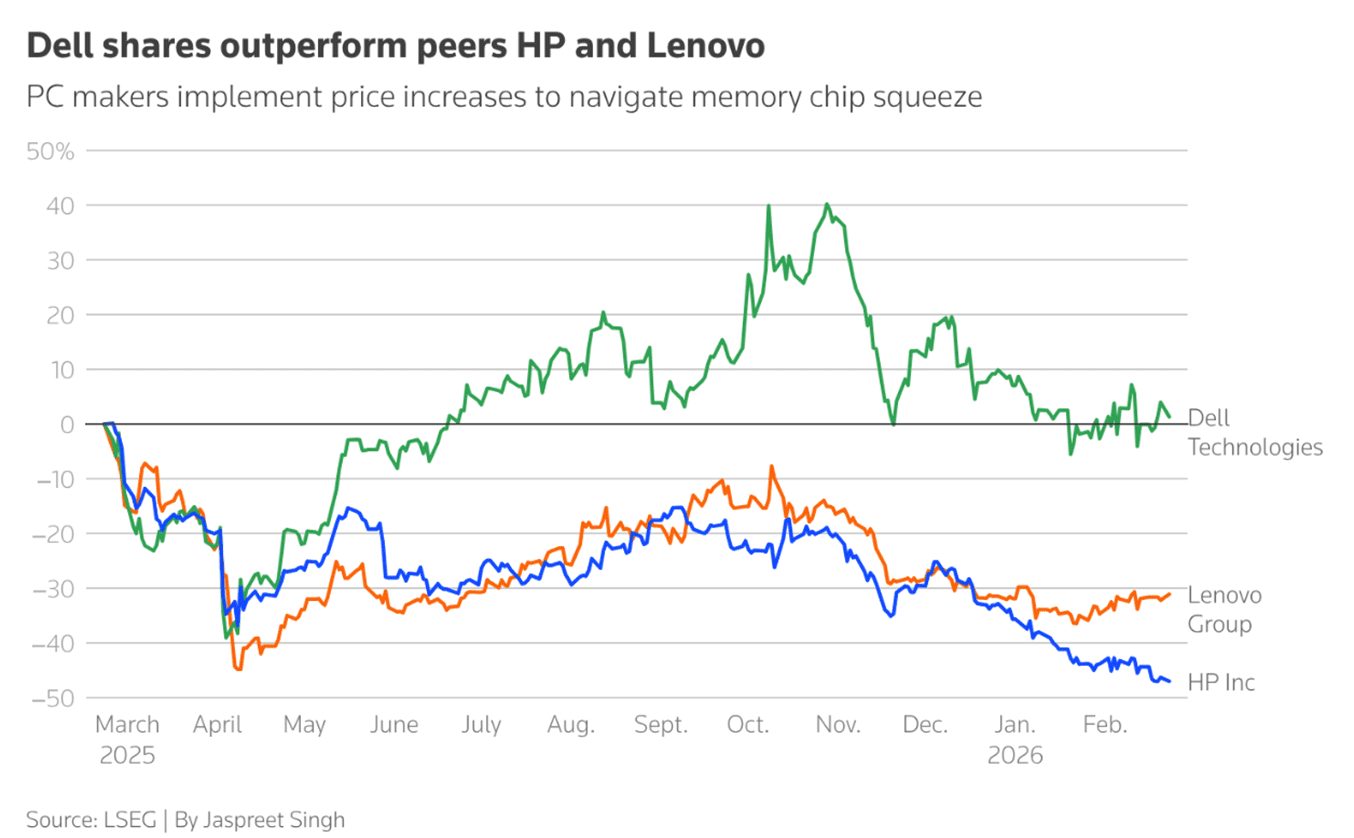
Pricing power in consumer tech is uneven. Premium ecosystem brands like Apple benefit from loyalty, integration, and switching costs, so customers are less sensitive to modest price increases. Commodity PC and Android makers compete mainly on price, where small differences drive switching and limit their ability to pass through higher costs. If memory prices stay high, margin pressure will hit mid-tier and commoditised players far harder than premium brands.
Why investors should pay attention
A RAM shortage may sound technical. It isn’t. It flows directly into earnings via:
- Gross margin pressure. Sustained memory inflation can compress margins, particularly for price-driven competitors. Ask: Are margins trending down quarter over quarter?
- Earnings volatility. Companies that can’t offset higher input costs may report weaker profits, softer guidance, or downward revisions. That often translates into stock volatility. Ask: Are companies able to raise prices without impacting demand?
- Inventory risk. Some firms may build inventory to secure supply. If memory prices later fall, they’re left holding higher-cost components. Poor timing can magnify margin swings. Ask: Are firms building inventory, or flagging supply constraints?
The fifth perspective
The market often focuses on the obvious winners of a theme. In this cycle, that’s AI chips and data centre hardware. But second-order effects tend to matter just as much, especially when they reshape cost structures across adjacent industries.
Memory is a cyclical, capital-intensive business. When demand shifts abruptly, pricing power can change hands quickly. That shift doesn’t stay contained upstream. It works its way through income statements, alters competitive positioning, and exposes which companies truly control their economics.
For investors, the real opportunity isn’t spotting the headline trend. It’s identifying where that trend quietly changes incentives, margins, and behavior across the value chain. The companies that manage cost volatility with discipline will compound. The ones that can’t will see it in their weaker returns.

