
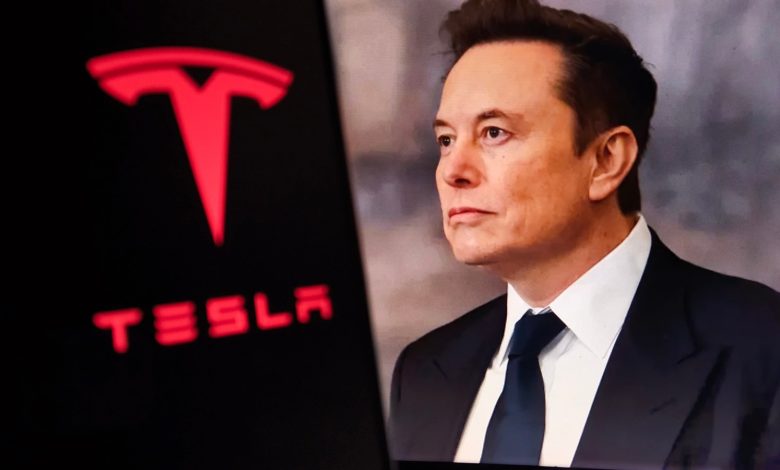
Tesla’s board of directors has once again ignited a global debate on corporate governance by approving a compensation structure that stands as the largest in history. The package offers CEO Elon Musk the opportunity to earn up to US$1 trillion in stock-based rewards. However, this payout is entirely contingent on the company achieving a series of extraordinarily ambitious milestones over the next decade.
To supporters, this plan represents the pinnacle of “pay for performance.” They view it as the ultimate mechanism to align a visionary founder with long-term shareholder outcomes. To critics, it is a case study in governance capture. They argue that a compliant board is rewarding a dominant CEO for improbable outcomes while he consolidates control over Tesla’s future. In this article, we will deconstruct the package, evaluate the financial probability of success, and assess the risks for shareholders.
Engineering a trillion-dollar payout
The new compensation plan extends the “moonshot” philosophy that defined Musk’s 2018 pay package but scales it to match Tesla’s current size. The board has designed a framework that links Musk’s potential payout to extreme financial and operational targets. These targets require Tesla to grow beyond the scale of the entire global automotive industry and rival the combined value of the world’s largest technology companies.
The package is divided into 12 equal tranches. Each tranche vests only when Tesla simultaneously achieves a specific Market Capitalisation Milestone and a corresponding Operational Milestone.
The 2025-2035 performance targets
| Metric | Target Goal | Current Performance (2025) | Implied Growth Required |
| Market Capitalization | $8.5 trillion | ~$800 billion | +960% |
| Annual Vehicle Output | 20 million units | ~1.8 million units | +1,000% |
| Robotaxi Fleet | 1 million active | Prototype stage | Undefined |
| Annual EBITDA | ~$400 billion | ~$13 billion | +3000% |
The board argues that these metrics are deliberately extreme. They claim Musk is rewarded only for historic accomplishments. Critics counter that the numbers are so stretched that they resemble science fiction rather than disciplined corporate forecasting.
The “golden handcuffs” thesis

- The board’s justification for this unprecedented sum rests on three primary arguments.
- The scale of ambition. For Musk to earn the full payout, Tesla must become the most valuable corporation in human history. The plan requires the company to add roughly US$7.7 trillion in market capitalisation. This is a level of value creation unparalleled in global equity markets. Even transformational companies like Apple, Microsoft, and Amazon did not expand at this magnitude over a single 10-year window.
- The “AI pivot” incentive. The board recognises that selling electric vehicles alone cannot justify an US$8.5 trillion valuation. To hit these targets, Musk must successfully pivot Tesla into a nascent AI monopoly. He must commercialise two unproven technologies at an industrial scale: the Robotaxi network and the Optimus humanoid robot. The compensation plan effectively treats the traditional automotive business as a solved problem. It places the entire financial incentive on the success of these future AI products.
- Focus and retention. Investors explicitly cite “key person risk” as a major concern. Musk is no longer solely focused on Tesla. He is the CEO of SpaceX, the CTO of X (formerly Twitter), and the founder of xAI. He also directs significant attention to Neuralink and Starlink. This package functions as “golden handcuffs” by requiring him to remain as CEO or Chief Product Officer to vest the shares. It forces him to prioritise Tesla’s growth over his other ventures if he wishes to claim the reward.
The reality check
While the logic of “pay for performance” is sound in theory, the specific numbers require rigorous scrutiny. Achieving an $8.5 trillion valuation implies financial metrics that defy historical precedent.
At a generous technology multiple of 50 times earnings, a US$8.5 trillion market cap requires Tesla to generate roughly US$170 billion in annual net income. For context, in 2023 and 2024, Tesla’s net income hovered between US$7 billion and US$15 billion. Musk needs to increase the company’s profitability by at least 11 times over the next decade.
Competitive headwinds
The path to this growth is steeper now than it was in 2018 due to deteriorating fundamentals.
- Margin compression: Tesla’s automotive gross margins have compressed significantly. They have fallen from peak levels of about 27% in 2022 to under 18% in 2025. Aggressive price cuts were necessary to maintain volume growth against fierce Chinese electric vehicle competitors, such as BYD and Xiaomi.
- The law of large numbers: Growing a US$50 billion company to US$500 billion is difficult. Growing an US$800 billion company to US$8.5 trillion requires adding the total value of Amazon, Google, and Microsoft combined to Tesla’s current worth.
Analyst scepticism
Mainstream analyst consensus falls far short of the board’s targets. Bloomberg’s deep dive on Tesla valuation shows even the most optimistic bull analyses cluster in the low-to-mid trillions, and Reuters’ examination of the proxy notes third-party bull-case models that peak at roughly $2.5 trillion.
The board’s $8.5 trillion target seems to exceed these bullish forecasts by more than threefold, which implies the compensation plan is priced for a singularity-style outcome in AI and robotics rather than through ordinary operations. While Musk would undeniably deserve the payout if he bridges this gap, the plan appears structured around statistically implausible outcomes.
Governance and shareholder risk
The sheer magnitude of the package raises serious governance concerns and elevates long-term risks for minority shareholders.
- The blocking stake and control. The most significant implication of this package is its impact on voting power. Musk currently owns approximately 13% of Tesla. If he unlocks all tranches of the new plan, his ownership stake would rise to between 25% and 29%. This is a critical threshold. A 25% stake effectively grants a shareholder a blocking minority. It would make it mathematically nearly impossible for activist investors or other shareholders to override his decisions. It would essentially render Tesla a founder-controlled entity in perpetuity.
- Massive dilution. The US$1 trillion payout is funded entirely through the issuance of new shares. Based on the current share count of roughly 3.4 billion, the full exercise of these options would dilute existing shareholders by approximately 8% to 10%. Retail investors are effectively paying for this package by accepting a meaningfully smaller share of Tesla’s future profits and voting rights.
- Lack of board independence. Concerns regarding governance capture are not theoretical. They are supported by legal precedent. A Delaware court previously voided Musk’s 2018 compensation plan after finding that Tesla’s directors failed to properly evaluate the award due to their close ties to Musk. Furthermore, in early 2025, Tesla directors agreed to return more than US$900 million to shareholders to settle claims of excessive board compensation. These incidents deepen the fear that the board functions as a rubber stamp rather than an independent fiduciary.
Is betting against Musk risky?
While these targets may seem mathematically improbable, history offers a compelling counterargument; Musk has achieved this before. When Tesla introduced the 2018 package valued at US$56 billion, critics widely labelled it absurd. At the time, Tesla’s market cap was roughly US$50 billion. The plan required it to grow to US$650 billion.
The result: By early 2023, Musk had unlocked all 12 tranches. Tesla’s market cap exceeded US$1 trillion at its peak, far surpassing the goal. The company transformed from a cash-burning startup into a profitable S&P 500 constituent.
Musk turned derided goals into delivered results. For this reason, many long-term investors view today’s trillion-dollar figure not as delusion but as another iteration of Musk’s asymmetric betting style.
The fifth perspective
From a traditional value investing perspective, the US$1 trillion compensation package is indefensible. It is excessively ambitious, significantly dilutive, and governed by a board with a history of deference to the CEO.
However, Tesla has never operated according to traditional metrics. The company’s history is defined by achieving goals that experts labelled impossible. The question for shareholders is not whether the payout is too high, but whether they are willing to bet their equity that lightning can strike twice. For retail investors, the calculus is simple. Are you investing in Tesla’s business fundamentals, or are you paying a premium to invest in Elon Musk’s legend?

