
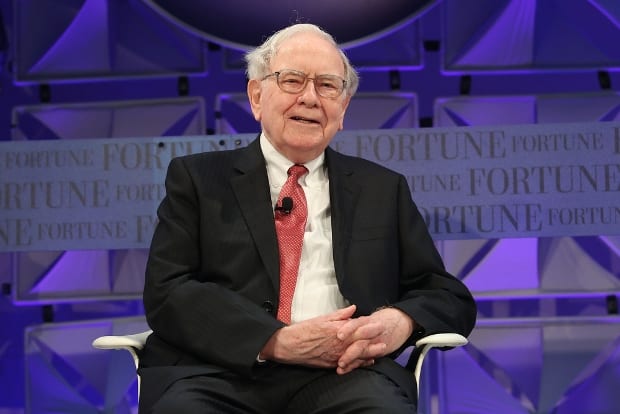
Warren Buffett’s annual letters to Berkshire Hathaway shareholders consistently provide profound business wisdom, and the 2024 edition is no exception. As Buffett nears his 95th birthday, this year’s letter highlights several critical themes: embracing mistakes, maintaining a long-term investment perspective, and succession planning.
If you don’t have time to read all 14 pages of his latest letter, here are six key takeaways:
1. Berkshire Hathaway reported impressive financial results, with operating earnings reaching US$47.4 billion. This performance was driven by improved results across several of the conglomerate’s business segments.
Notably, Berkshire’s insurance operations, including GEICO and Gen Re, contributed significantly to these strong earnings. Additionally, the company’s substantial cash and bond holdings allowed it to benefit from higher interest rates, boosting its investment income.
In this year’s shareholder letter, Warren Buffett discussed a few of Berkshire’s key holdings, including Bank of America, Apple, Coca-Cola, and Moody’s Corporation. Buffett’s commentary reinforces his preference for businesses with strong competitive positions.
‘We own a small percentage of a dozen or so very large and highly profitable businesses, including household names such as Apple, American Express, Coca-Cola, and Moody’s. Many of these companies generate exceptionally high returns on the net tangible equity required for their operations. Outstanding businesses are rarely available for purchase in their entirety, but small fractions of these exceptional companies can be bought Monday through Friday on Wall Street. Occasionally, they even sell at bargain prices.’
2. Buffett emphasises acknowledging and learning from mistakes, a hallmark of his leadership philosophy. He admits to making errors in capital allocation and personnel decisions throughout Berkshire’s history. Buffett spent years trying to revive Berkshire – a dying textile business – rather than focusing on building his insurance business, a move he estimates cost him US$200 billion. This transparency starkly contrasts many other large corporations that rarely, if ever, publicly acknowledge their missteps.
Buffett notes that between 2019 and 2023 alone, he used ‘mistake’ or ‘error’ 16 times in his shareholder communications. More importantly, he emphasises that recognising mistakes is only the first step; taking prompt action to address them is what truly matters.
He quotes his late business partner Charlie Munger, saying, ‘Problems… require action, however uncomfortable that may be.’
Buffett identifies what he calls the ‘cardinal sin’ in business: delaying the correction of mistakes, or what Munger termed ‘thumb-sucking’. This principle applies to investment decisions and personnel choices, with Buffett noting that personnel disappointments can be particularly painful, comparing them to failed marriages.
‘Sometimes I’ve made mistakes in assessing the future economics of a business I’ve purchased for Berkshire – each a case of capital allocation gone wrong. That happens with both judgments about marketable equities – we view these as partial ownership of businesses – and the 100% acquisitions of companies.
At other times, I’ve made mistakes when assessing the abilities or fidelity of the managers Berkshire is hiring. The fidelity disappointments can hurt beyond their financial impact, a pain that can approach that of a failed marriage.’
3. When it comes to CEO selections, Buffett emphasizes that one should never judge a candidate solely by their educational background. As he puts it, ‘Education isn’t everything.’
The billionaire points to the late Pete Liegl, the CEO of the recreational vehicle maker Forest River, as an example. Despite lacking a prestigious education, Liegl was a ‘natural,’ Buffett said. He also praises the success of his friend Bill Gates, the Microsoft co-founder who dropped out of Harvard, and describes Ben Rosner, a former Berkshire Hathaway executive, as a ‘retailing genius’ despite the fact that he stopped school after the 6th grade.
In Buffett’s view, prestigious schools will only get you so far at Berkshire Hathaway. ‘I never look at where a candidate has gone to school. Never!’ he declares emphatically in this year’s shareholder letter. While Buffett himself attended the University of Nebraska-Lincoln, University of Pennsylvania, and Columbia University, he maintains that ‘a very large portion of business talent is innate, with nature swamping nurture.’
4. Berkshire’s swelling cash reserves reached an unprecedented US$334.2 billion by the end of 2024 (more than double the US$163.7 billion held at the end of 2023); Buffett reassures shareholders that the great majority of their invested money remains in equities, not cash. This statement comes against the backdrop of Berkshire being a significant net seller of stocks in 2024, purchasing $9.3 billion while selling over $143 billion worth of equities.
Buffett’s letter reaffirms his fundamental investment principles in today’s economic climate. He insists Berkshire will always prioritise owning businesses over holding cash, warning that ‘Paper money can see its value evaporate if fiscal folly prevails.’ In contrast, ‘Businesses, as well as individuals with desired talents, however, will usually find a way to cope with monetary instability.’
In other words, Buffett remains steadfast in his commitment to equities, even as Berkshire has taken a more cautious approach to the market. He believes that businesses are resilient enough to weather economic storms, in contrast to the fragility of paper currency. This conviction is a hallmark of Buffett’s long-term, value-oriented investment strategy, which has served Berkshire and its shareholders well over the decades.
5. Warren Buffett discusses his investments in Japanese companies, specifically the five major trading companies known as ‘sogo shosha’ (general trading companies). These include Itochu, Marubeni, Mitsubishi, Mitsui, and Sumitomo. Berkshire bought shares in these five large Japanese firms in 2019 and has since increased those stakes.
‘We simply looked at their financial records and were amazed at the low prices of their stocks. As the years have passed, our admiration for these companies has consistently grown.’
Buffett lauds these firms’ prudent capital deployment, respectful attitude toward shareholders, and modest approach to executive pay. Buffett suggests that Berkshire might increase its stakes in these Japanese companies if the opportunity arises. This indicates his ongoing confidence in their prospects and willingness to capitalise on any further undervaluation by the market.
6. As Buffett nears 95 years of age, he addresses the inevitable leadership transition at Berkshire. He confidently assures shareholders that his chosen successor, Greg Abel, is well-prepared to lead the conglomerate. Buffett expresses complete confidence in Abel’s capabilities, stating that he ‘shares the Berkshire creed’ regarding transparent shareholder communication and understands the dangers of misleading investors.
Significantly, Buffett confirms that Abel has ‘vividly shown his ability to act’ when investment opportunities arise, suggesting he has demonstrated the capital allocation skills necessary to lead Berkshire. Warren assured investors that Abel would continue providing shareholders with frank annual updates, maintaining the transparency that has defined Berkshire’s shareholder relationship. This marks the first time Buffett acknowledges more directly than in previous letters that ‘it won’t be long before Greg Abel replaces me as CEO and will be writing the annual letters.’
The fifth perspective
Buffett’s 2024 shareholder letter reaffirms his timeless investment wisdom while addressing the realities of Berkshire’s evolving future. From acknowledging past mistakes to emphasizing long-term business ownership, Buffett’s insights continue to shape investor thinking. As Buffett nears his 95th birthday, his letter serves as both a reflection on decades of disciplined investing and a blueprint for the company’s future under new leadership.
As usual, Berkshire’s annual meeting will again be available via live webcast on Yahoo. To view the event, visit https://www.cnbc.com/brklive/ at 8:30 a.m. Eastern Standard Time on Saturday, 3 May 2025. You can click here if you’d like to read Buffett’s full 2024 annual letter to Berkshire Hathaway shareholders. Enjoy the read!

